

Your Leading Hunan Hechengyuanmai Equipment Co., Ltd. Supplier
Hunan Hechengyuanmai Equipment Co., Ltd. is a manufacturer dedicated to the manufacture and development of coffee appliances. From entrepreneurial dreams to mature markets, Yuanmai people have always adhered to their responsibility in the coffee industry. Our products have always been rigorous and focused, always on the road, never retreating, always innovating, and never stopping!
Why Choose Us?
Quality control
For each process,we have strict inspection standards,and we always insist that quality is life.
Technical support
We have an independent R&D design team,They can design and produce all coffee appliances Product.
Competitive price
We have a professional purchasing team and costing team,trying to reduce costs and profits,and provide you with a good price.
24h online service
You can contact us to inquire about pre-sales, sales, and after-sales services, and we will give you a very satisfactory.We are at your service online 24 hours a day.
-

Espresso Machine With Grinder, Dual Boiler, 9 Bar Pressur...
Smart Coffee & Tea Machine – All-in-One Espresso, Grinder & Tea Brewing SystemSmart Brewing. Add to Inquiry -
Commercial Espresso Machine with Grinder for Small Coffee...
Product Name: Coffee Machine with Grinder Use: Home, Hotel, Café, Bar Power Rating: 1480–1770W Add to Inquiry -
Triple Heating Block Espresso Machine | Home & Small Coff...
* Designed for home coffee lovers, small cafes, mobile coffee carts, bubble tea shops, dessert Add to Inquiry -
Espresso Coffee Maker With Built-in Grinder
⚡Ultra-Fast Heating☕Professional Burr Grinder💧15-Bar Italian Pump#Large Bean Hopper#Precision Add to Inquiry -
Best Fully Automatic Espresso Machine Commercial Coffee M...
1-ntuitive, user-friendly TFT color display with integrated maintenance programs-Automatic coffee Add to Inquiry -
Automatic Digital Display Grinder Coffee Machine Espresso...
* LCD display*15 speed grinding options*250g bean bin *Italian ULKA Pump Add to Inquiry -
Automatic Bean To Coffee 32 "touch Screen vending Machine
* Imported knife head: The use of Swiss MAHLKONIG original sharpening blade, can carry out 500,000 Add to Inquiry -
All-in-One Coffee Machine Self-Cleaning Grinder Milk Frot...
Product Name:coffee machine with grinder. Use:Home, hotel, cafe, bar. Power rating:1480-1770W. Add to Inquiry -
Best Semi Automatic Espresso Machine With Frother
KF-YS3020 is the best coffee machine with automatic milk frother, a mechanically controlled coffee Add to Inquiry -
Best Automatic Espresso Machine With Grinder
The coffee machine of style KF-YS5600 is the best commercial automatic coffee machine that can make Add to Inquiry -
Best Auto Espresso Machine
The coffee machine of model KF-YS3030 is the best auto coffee machine with only three touch Add to Inquiry -
Commercial Espresso Machine With Grinder
Model KF-SY50 is a commercial coffee maker with grinder, 1000g large capacity bean box, 19bar high Add to Inquiry
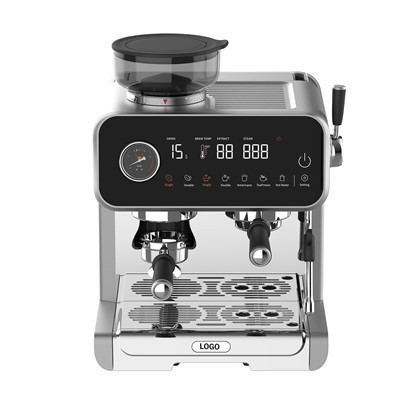


What Is Espresso Machine?
An espresso machine brews coffee by forcing pressurized water near boiling point through a "puck" of ground coffee and a filter in order to produce a thick, concentrated coffee called espresso. Multiple machine designs have been created to produce espresso. Several machines share some common elements, such as a grouphead and a portafilter. An espresso machine may also have a steam wand which is used to steam and froth liquids (such as milk) for coffee drinks such as cappuccino and caffè latte.
Benefits of Espresso Machine
Convenience
You can brew high-quality espresso at home or in your office without having to go to a coffee shop.
Quality
Espresso machines allow you to control the brewing process, ensuring that every shot is fresh and perfectly brewed.
Variety
Espresso machines can make a variety of coffee beverages, such as lattes and cappuccinos.
Cost savings
Over time, an espresso machine can save you money compared to purchasing coffee drinks from a coffee shop every day.
Health benefits
Espresso contains antioxidants and is associated with various health benefits, including reduced risk of stroke and type 2 diabetes.
Sustainability
Making coffee at home reduces waste from disposable cups and packaging.
Types of Espresso Machine
Steam-driven machines
It is reported that in 1884, Angelo Moriondo presented “new steam machinery for the economic and instantaneous confection of coffee beverage” at the Turin General Exposition. The pressurised coffee system was born.
Electric steam-driven machines are still in use today. Their simplicity makes them easy to use and maintain, and they are affordable and compact.
Within an airtight tank, water is brought to boiling point and steam is created. This produces pressure, which forces the water through a reservoir and into the coffee. It’s similar to what happens inside a stove-top moka pot.
The downside of steam-driven machines is that they only reach 1–1.5 bars of pressure. The ideal pressure for a shot of espresso is 9 bars.
Lever-driven machines
Lever-driven machines require physical strength to pull a shot. There are two kinds: manual and spring-loaded.
A manual machine can be recognised by the horizontal resting position of the lever. When it is raised, an opening in the brewing chamber draws in pre-heated water to saturate the grounds. The barista can control the length of pre-infusion, flow rate, and pressure by when they bring down the lever.
In spring-driven machines, the lever points up when the internal spring is relaxed. Pulling the lever down causes the spring to compress and brings the piston up. This creates space in the brewing chamber for water to enter.
The lever comes back up as the spring releases its tension. This causes the piston to push the water down and extract the espresso.
Pump-driven machines
Pump-driven espresso machines have been around since the 1960s and dominate the market. They work by using an electronic pump to drive pre-heated water through the brew chamber and into a bed of coffee. With an electronic pump, it is easy to achieve consistent high pressure.
Components of Espresso Machine
Boiler
The boiler is the heart of the espresso machine. It is responsible for heating the water and creating the pressure needed to brew the coffee. The boiler can be made of different materials such as copper, aluminum, or stainless steel. It is important to keep the boiler clean to prevent mineral buildup and corrosion. The best way to do this is to flush the boiler with clean water after each use and descale it regularly.


Group head
The group head is the part of the machine where the coffee is extracted. It is responsible for holding the portafilter and the coffee grounds. It is also responsible for regulating the water flow and pressure. The group head should be cleaned regularly to remove any coffee oils and debris. This can be done by running a cleaning solution through the group head and then rinsing it with clean water.
Portafilter
The portafilter is the part of the machine that holds the coffee grounds and filters the coffee. It is important to keep the portafilter clean to ensure a consistent extraction. The portafilter should be cleaned after each use by removing the coffee grounds and rinsing it with clean water.


Steam wand
The steam wand is used to froth milk for cappuccinos and lattes. It is important to keep the steam wand clean to prevent any buildup of milk residue. This can be done by running a cleaning solution through the steam wand and then rinsing it with clean water.
Drip tray
The drip tray is the part of the machine where the excess coffee and water drips. It is important to keep the drip tray clean to prevent any buildup of coffee oils and debris. This can be done by removing the drip tray and cleaning it with a mild detergent and warm water.


Water reservoir
The water reservoir is the part of the machine where the water is stored. It is important to keep the water reservoir clean to prevent any buildup of mineral deposits. This can be done by cleaning the water reservoir with a mild detergent and warm water.
How to Maintain Espresso Machine
Use several different cloths
We suggest keeping a couple of different cloths next to your coffee machine. Use one of them when cleaning the body, grate and working area around the appliance, and reserve the other one (this one must be damp, by the way) for cleaning the steam wand. It’s a good idea to wash the second cloth as soon as you’re finished brewing milk-based drinks for the day. When cleaning the portafilter, use a paper towel or napkin to get rid of both coffee grounds and accumulated oils.
Rinse the brew group
Before and after brewing a serving of espresso, rinse the brew group. All you have to do is dispense some water without putting the portafilter on. This will successfully wash away any used grounds stuck onto the mesh inside the brew group. Hot water will also warm up the group and keep your coffee from getting more acidic as it brews.
Don’t leave used coffee grounds in the portafilter
After each serving, shake the used grounds out of the portafilter and clean it with a dry paper towel or cloth. The longer the grounds stay inside the portafilter, the harder it is to get every bit of them out. Don’t forget that used grounds are full of water too, which turns them into an excellent breeding ground for bacteria.
Clean the tamper
If your coffee machine boasts a built-in tamper, make sure that there are no grounds in it left over from the last time you tamped coffee before preparing another serving. You should only tamp a new batch of coffee if you’re absolutely sure that there’s nothing stuck to the tamper and its surface is even and dry. If you disregard any of these details, you’re guaranteed to feel it in the resulting cup.
Maintain the steam wand
Before you start frothing milk, release some steam into a cloth. This will help you get rid of any milk residue or condensation hidden inside the wand. Once you’re finished frothing, clean the wand with a damp cloth and release some steam once again. When you’re done brewing coffee for the day, immerse the wand in a milk frothing jug filled with water and leave it to soak overnight. You’ll prevent milk and other impurities from sticking to the wand in that way. To make these impurities easier to remove, use a special milk system cleaner.
Make sure that the outside of your machine looks clean too
The brewing process might result in some splashes landing on the body or grate of your appliance. We recommend cleaning these splashes off right away — once they dry out, it’ll be a lot harder to do. Sure, this won’t affect the flavour of your coffee, but a clean coffee machine is synonymous with proper respect paid to the brewing process and the drink itself.
The Difference Between Espresso Machines and Coffee Makers
It's all in the brewing method
01/
Roasting
Filter coffee beans are roasted with the brewing method in mind. The beans tend to be much lighter which preserves the acidity of the bean. In contrast, espresso roasts are usually much darker, and richer in flavour. This creates the intense flavour that espresso is famous for and also provides the strength of coffee required for mixing with milk to create cappuccinos and lattes.
02/
Caffeine Content
Coffee makers produce somewhere between 95mg and 165mg of caffeine per 225ml cup. Coffee can be made stronger by selecting a darker roast or by increasing the brewing time. Espresso machines produce between 375mg and 520 mg of caffeine per 225ml. Nespresso capsules cater to all tastes. Original capsules contain between 50mg and 120mg, Vertuo capsules range from 70mg to 150 mg of caffeine for Espresso and Gran Lungo pours, and between 170mg and 200 mg per cup for Mug and Alto coffee sizes.
03/
Grinding
Espresso coffee machines use a fine, powder-like grind of coffee while coffee makers use a coarse, thick grind.
04/
Brewing
The finer grind of espresso coffee means that an espresso machine brews and pours within about 30 seconds. In contrast, the coarser grind of drip coffee means you may have to allow up to ten minutes of brewing time.
05/
Pressure
An espresso machine uses high pressure to force water through coffee within only a few seconds. Coffee makers rely on the power of gravity to gradually pull water through the filters.
06/
Price
The coffee maker is almost always the cheaper option due to its simple function and limited features. But if it is a barista style coffee that you are seeking it’s well worth investing in a quality espresso machine.
How Does an Espresso Machine Work?
All espresso machines, regardless of their complexity, require a water source and a heat source to brew espresso. They also require a hardened, tamped-down “puck” of finely ground coffee beans. Finally, all espresso machines need a reservoir to store the finished espresso or a nozzle through which the espresso can drip into a waiting cup.
In the most basic terms, an espresso machine works by using steam, pistons, or pumps to force hot water through the puck of coffee beans. The high pressure inside an espresso machine and the low water ratio to coffee give espresso its distinctive thick consistency. Higher-end and more expensive espresso machines may have additional features that contribute to the overall flavor profile of the beverage.


How Does Pressure Work in an Espresso Machine?
The heart of the espresso machine is the pressure generating system. For most equipment that is the pump, but manual, lever operated machines use a piston to create pressure in the coffee puck.
As we mentioned before, the pressure can also be generated by steam, though there are very few steam based espresso makers that can generate enough pressure to qualify as modern espresso making devices.
The pressure is the most unique feature of an espresso machine, and the brewing method. Pressure brewing works by creating more kinetic energy in the coffee grounds, and speeds up the dissolution of the soluble solids from the beans.
What Is An Espresso Machine Exactly
An espresso machine is an appliance that is used to produce the traditional Italian coffee drink known as an espresso. Those who use these machines professionally such as those found in places like Starbucks are known as barista's and the knowledge that is required to make the finest espressos is concerned a craft by many Italians.
The coloquial term for producing a short of espresso is known as "pulling a shot" because the older style espresso machines required the user to pull a long handle in order to produce a shot.
In order for some one to produce a shot of espresso they need to fill a filter basket with either 7-10 grams of ground coffee for a single shot of 30mL and 12-18 grams for a double shot of 60mL of espresso.
This is then tamped (compressed) into a densely packed puck of espresso. The portafilter or group handle then holds the filter basket and this is locked under the grouphead's diffusion block.
Once the process begins pressurized water is forced into the grouphead and so through the ground coffee that is held in the portafilter. If the water is too cold the coffee will taste sour and if the water is too hot the coffee will taste bitter. So a good quality espresso machine should control the temperature of the brewed water so that it is within a few degrees of the ideal heat to make that perfect espresso coffee.
Using an espresso machine with produce a rich almost syrupy beverage as it extracts and emulsifies the oils that are found in the ground coffee. The ideal double shot of espresso should take between 25 to 30 seconds to arrive from the time when the machine's pump is first turned on.
By varying the fineness of the coffee grinds, the amount of pressure use to tamp the ground coffee down or the pump pressure itself can be used in order to bring the extraction time to the perfect time needed to produce a good espresso.
Most people who drink espresso prefer their shots to be poured directly into a pre-heated demitasse or shot glass so that it maintains its ideal temperature.
An espresso machine also comes with a steam wand which can be used to steam and froth milk for those milk based espresso drinks such as lattes and cappuccino's.
Producing your own espresso with your very own espresso machine is an experience not to be taken lightly. Not only will you save money over the coffee shop variety the taste is out of this world.
What Are Some Common Problems with Espresso Machines and How Can I Troubleshoot Them?
Some common problems with espresso machines and their troubleshooting methods are:
Steam wand not working
Check if the steam wand is clogged or if the machine needs to be descaled. Also, ensure that the wand is properly connected and tightened.
If these methods do not solve the problems, it may be necessary to contact a professional technician or the manufacturer for further assistance.
Machine not turning on
Check if the machine is plugged in and the power outlet is working properly. Also, ensure the switch is in the “on” position and the water tank is filled with water.
No water or low pressure
Check if the water tank is empty and fill it if needed. Check if the water line is kinked or clogged. Also, ensure the steam wand is closed.
Leaking water
Check if the water tank is overfilled or if the drip tray is full. Also, check if the water lines and valves are properly connected and tightened.

No crema
Ensure that the coffee is fresh and correctly ground. Also, check if the portafilter is properly loaded and tamped.

Too bitter or too weak espresso
Adjust the grind size and the amount of coffee in the portafilter. Also, check the water temperature and ensure that the equipment is clean.
Our Factory
As a manufacturer dedicated to R&D, manufacturing and sales of related coffee appliances, we have an independent R&D design team, 6 complete production lines, and an independent injection molding workshop to provide customers with a one-stop shopping experience.

Cases


FAQ
Q: What's the difference between a coffee machine and an espresso machine?
A: An espresso machine uses high pressure to force water through coffee within only a few seconds. Coffee makers rely on the power of gravity to gradually pull water through the filters. The coffee maker is almost always the cheaper option due to its simple function and limited features.
Q: What does an espresso machine do?
A: An espresso machine brews coffee by forcing pressurized water near boiling point through a "puck" of ground coffee and a filter in order to produce a thick, concentrated coffee called espresso.
Q: Why espresso is better than regular coffee?
A: Espresso also has antioxidants and caffeine, which aid metabolism and help boost mood. Espresso is not inherently healthier than regular coffee, but drinkers can skip out on excess sweeteners and sugars often added in other coffee drinks since it can be enjoyed as is.
Q: How is espresso different then coffee?
A: Espresso is thicker and more intense than coffee because of the lower grounds to water ratio, the finer grind, and the pressurized brewing method. Regular coffee uses a coarser grind, more water and gravity to extract the final brew.
Q: Do you need special coffee for espresso?
A: Here's a quick answer to the question: All coffee can be used for an espresso machine, provided it has the right fine grind. That said, many prefer to use dark roasted coffee due to its stronger flavor. In fact, you can sometimes find coffee labelled 'espresso' due to its darker roast.
Q: Why do people buy espresso machines?
A: Not only do you save money on expensive cafe drinks, but you can also enjoy delicious espresso at home any time you want! Espresso machines can be used for anything from making a quick cup of coffee to hosting a dinner party with friends.
Q: Is having an espresso maker worth it?
A: A home espresso machine is worth it if you want to save money on monthly coffee, are tired of commuting to cafes, or want to sharpen your barista skills. Making coffee at home is also a very relaxing endeavor! A home espresso machine is not an ideal investment if you're on a tight budget or drink coffee occasionally.
Q: Is 1 shot of espresso equal to 1 cup of coffee?
A: This depends on what aspects you are attempting to “equal”. If you mean total volume of liquid, then an espresso shot is typically 1 fluid oz while a “regular” or “medium” coffee is usually 10–12 fluid oz. So in that case, one cup of coffee would be equal to about 10 shots of espresso.
Q: Is drip coffee the same as espresso?
A: The only real difference between drip and espresso is brew method. The brew method has a big influence on the final flavor profile of the beverage. Espresso is much more concentrated, therefore, acids and bitterness will be in higher concentrations.
Q: What is healthier coffee or espresso?
A: Many people think espresso and coffee are two distinct beverages, but they're actually just different brewing methods. Both types of drinks have similar benefits, although light- to medium-roasted coffee has a slight edge over espresso for supporting heart health, cognitive health, metabolic health, and more.
Q: Is espresso just strong coffee?
A: Espresso is a concentrate; coffee is diluted
While you can certainly brew a stronger, or more concentrated, cup of drip or French press coffee, you will still likely have a final product that contains less than 2% of extracted coffee.
Q: Can you make espresso without a machine?
A: STOVETOP OR 'MOKA POT'
A 'moka pot', or stovetop espresso maker, is probably the most traditional method of making espresso. It is also one of the most popular ways to brew a strong, dark shot of coffee without expensive equipment.
Q: Is black coffee just espresso?
A: So, while an Espresso is also a Black Coffee, a Black Coffee cannot be called an Espresso unless brewed by forcing hot water at high pressure through the finely ground coffee.
Q: Do you buy special beans for espresso?
A: While it's a common misconception that Espresso beans are different that Drip beans, in actuality they are equal. Any coffee bean can be used with any brewing device. In fact, the only thing that makes an espresso an espresso is that it was brewed using an espresso machine.
Q: Is espresso just finely ground coffee?
A: Espresso and coffee are not different things. Espresso is a type of coffee. More specifically, it's a method of brewing coffee that uses high water pressure and finely ground beans to make a small, concentrated shot (the term also refers to the shot itself).
Q: Why is espresso coffee so expensive?
A: The result is that espresso is more concentrated and has a more intense flavor than coffee. That intensity comes at a cost, though; espresso is more expensive to make because it takes more coffee beans to produce a shot of espresso than it does to brew a pot of coffee.
Q: What not to do with an espresso machine?
A: 7- Leaving coffee in the basket after pouring an espresso
Leaving used coffee in the filter holder is probably not the best idea: this bad habit accelerates the formation of coffee oils and grime inside the group and the filter holder, thus requiring a more frequent cleaning.
Q: What is the lifespan of an espresso machine?
A: Budget-friendly home espresso machines have a lifespan of three to five years on average, though some can hit as high as a decade with infrequent use.
Q: Is espresso hard on your stomach?
A: The rule is: the shorter the brewing time, the more stomach-friendly the coffee. For that reason espresso, despite its intensive and strong taste and appearance, is better digestible than filter coffee. In addition, espresso contains less caffeine than filter coffee. beans (see Coffee roasting grades).
Q: Is it OK to drink espresso everyday?
A: While there is no definitive answer to this question, it is generally recommended that espresso drinkers consume no more than two or three shots of espresso per day.
As one of the most professional espresso machine manufacturers and suppliers in China, we're featured by quality products and competitive price. Please rest assured to buy or wholesale discount espresso machine for sale here from our factory.
